


Description
What is GHK-Cu?
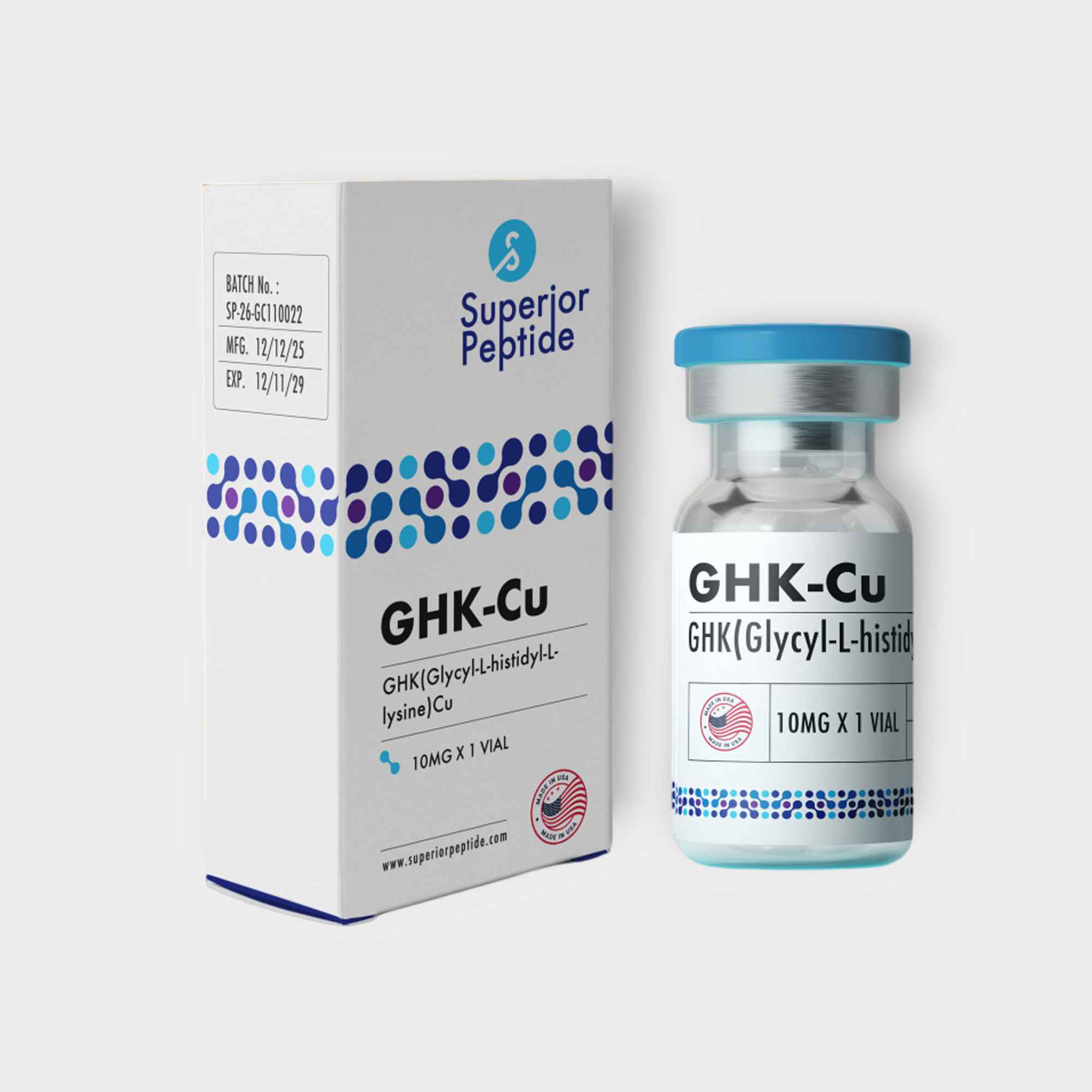
Superior Peptide GHK-Cu, the copper-bound peptide, Glycyl-L-Histidyl-L-Lysine-Copper(II) (GHK-Cu), is a naturally occurring complex ubiquitous in human biological fluids such as plasma, saliva, and urine. This compact tripeptide, GHK, demonstrates a remarkable binding affinity for copper ions, forming a stable structure that is integral to a variety of physiological functions. Revered for its capacity to rejuvenate and safeguard tissues, particularly in the context of remodeling and repair, GHK-Cu is crucial for sustaining healthy skin, accelerating wound closure, encouraging hair growth, and mediating potent anti-inflammatory and antioxidant responses. These diverse biological activities have made GHK-Cu a focal point of research and development in dermatology, cosmetic formulation, and regenerative medicine, where its potential for anti-aging applications and holistic tissue health enhancement is actively explored.
GHK-Cu Structure
Sequence: Glycyl-L-Histidyl-L-Lysine-Copper(II) (GHK-Cu)
Molecular Formula: C₁₆H₂₈CuN₆O₆⁺²
Molecular Weight: 463.98 g/mol
Description
Main Research Findings
1) GHK-Cu was found to elicit a protective effect in lipopolysaccharide-induced acute lung injury through the inhibition of excessive inflammatory responses
2) Treatment of wounds with topical GHK-Cu was found to decrease the amount of time it took to fill the wound with granulation tissue, decrease neutrophil counts, and improve neovascularization.
Anti-Inflammatory Effects of GHK-Cu
As it was mentioned above, GHK-Cu is shown to have antioxidant and anti-inflammatory properties. This is due to the fact that GHK is able to inactivate the damaging byproducts released from free radical reactions. GHK was also shown to combat copper-dependent oxidation of low-density lipoproteins, while various other common antioxidants, such as superoxide dismutase, only provided protection against oxidation up to 20%.
CHK-Cu Respiratory Implications
Due to the anti-inflammatory properties of GHK-Cu, researchers tested how the compound would affect acute lung injury and lung damaged due to COPD. It was found that overall GHK-Cu was able to aid in the remodeling and regeneration of connective tissue. Additionally, GHK demonstrated the ability to reverse the expression of various genes, most notably, the gene signature of COPD. In addition to reversing the expression of the COPD gene, it was found that GHK is capable of activating the opposite pathway, TNF-beta.
Researchers also found that when treating mice with GHK-Cu, they were able to protect the lungs from acute injury and were able to stop the filtration of inflammatory cells into the lungs. The study also showed that GHK-Cu was able to decrease the production of IL-6 and TNF-1 while increasing the activity of superoxide dismutase by blocking the activation of NFκB’s p65 and p38 MAPK. The p38 MAPK pathway allows response to external stimuli and can affect levels of apoptosis as well as gene expression and skin differentiation, while the activation of NFκB p65 has shown a correlation to the development of various types of cancer as well as diseases related to aging such as cardiovascular disease, osteoporosis, and Alzheimer’s (https://www.ncbi.nlm.nih.gov/pmc/articles/PMC6073405/).
Peptides Prefer the Cold
In order to reduce peptide breakdown, keep peptides refrigerated at all times but DO NOT FREEZE.
Swab the top of the vial with a 95% alcohol wipe before accessing.
Only Mix with Sterile Bacteriostatic Water
Bacteriostatic water is vital to preventing contamination and preserving the stability of the compound.
Push the needle through the stopper at an angle in order to direct the stream to the side of the vial.
Reconstituted peptide solution should be stored at around 4 degrees Celsius but not frozen, while lyophilized peptide solution should be kept at -20 degrees Celsius.
GHK-Cu is sold for laboratory research use only. Terms of sale apply. Not for human consumption, nor medical, veterinary, or household uses.

Reviews
There are no reviews yet.